














Milkweed Seeds - Swamp

SEASON
Perennial

USDA ZONES
3 - 8

HEIGHT
48 - 60 inches

BLOOM SEASON
Summer and fall

BLOOM COLOR
Pink

ENVIRONMENT
Full sun

SOIL TYPE
Consistently moist, pH 6.1 - 7.5

DEER RESISTANT
Yes

HOUSE PLANT
No

About...
Swamp Milkweed (Asclepias Incarnata) - This cousin of Butterfly Weed known as Swamp Milkweed blooms the first year from flower seed and tolerates heat, humidity, and even drought!MORE MILKWEED OPTIONS

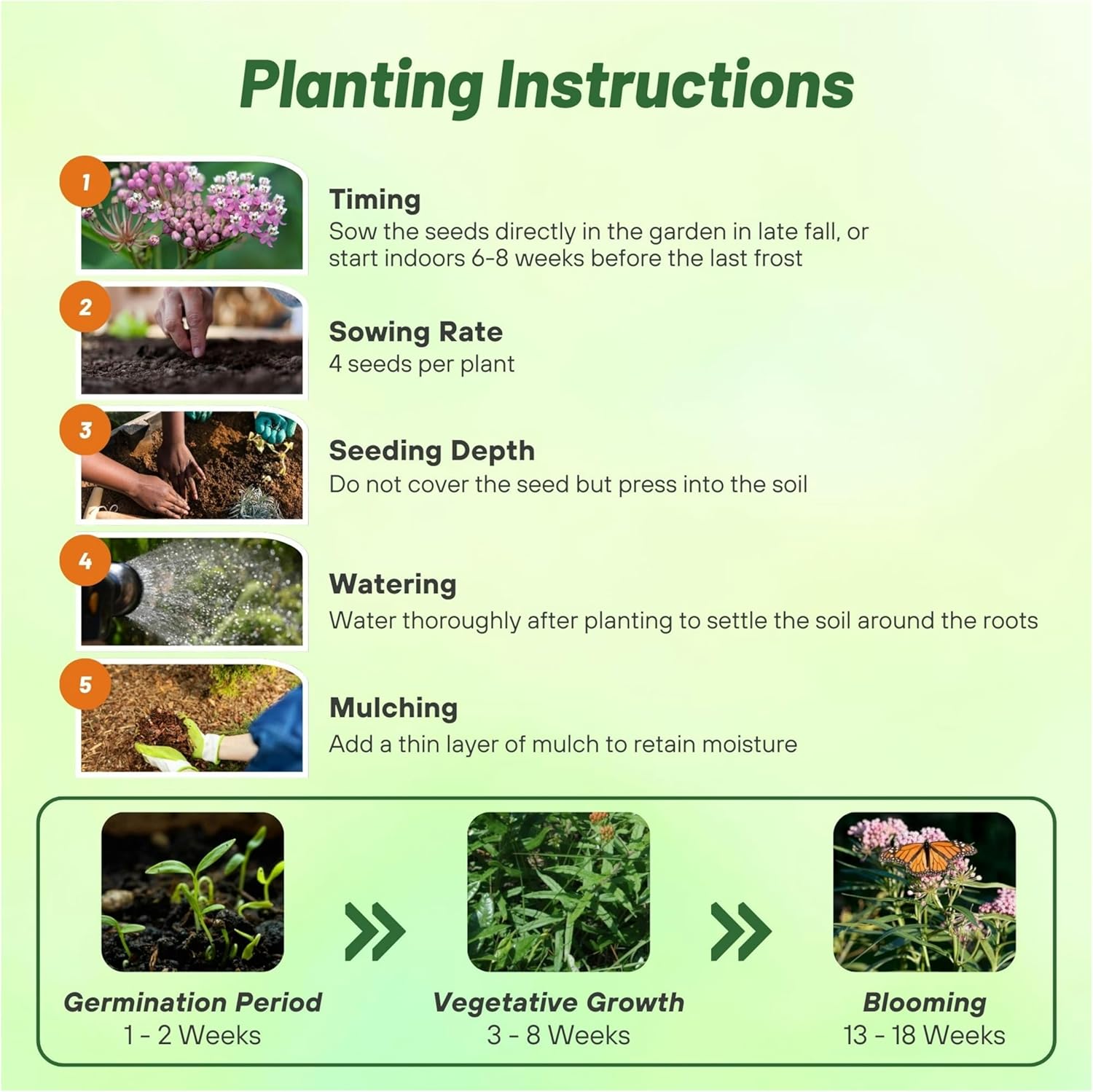
Planting Directions

TEMPERATURE
40F

AVERAGE GERM TIME
21 - 28 days

LIGHT REQUIRED
No

DEPTH
Do not cover

SOWING RATE
4 seeds per plant

MOISTURE
Keep moist until germination

PLANT SPACING
24 inches


Swamp Milkweed (Asclepias Incarnata) - This cousin of Butterfly Weed known as Swamp Milkweed blooms the first year from flower seed and tolerates heat, humidity, and even drought! Asclepias Incarnata flowers are fragrant, colorful, and carefree! A magnet for butterflies, Swamp Milkweed has flat-topped flower clusters that are easy for butterflies to land on, and they are vanilla-scented and rich in nectar. Growing Asclepias flower seeds is so rewarding knowing that these plants will soon be providing a food source for beneficial insects. Plants are typically found along streams and ditches or in moist areas of meadows and prairies. Plants grow 4 to 5 feet tall and have clusters of pink to mauve flowers at the tops of branches.
Asclepias Incarnata is prized for attracting monarch butterflies, and its foliage is sufficiently tender for larvae to feed on making this plant very valuable to the monarch butterfly population. Swamp Milkweed flowers are also nice for cutting, and the blooms are long-lasting in fresh and dried bouquets. This native American plant loves full sun and thrives in heat, humidity, and even drought. Swamp Milkweed plants prefer full sun and well-draining soil.
Many gardeners recommend a cold treatment to help Swamp Milkweed seeds germinate more quickly. To do this, dampen a paper towel, place the flower seeds on the towel and seal it in a ziploc bag. Place the bag in the refrigerator for 3 - 4 weeks. After the cold treatment, start the Swamp Milkweed seeds indoors. Do not cover the flower seeds as they need light to germinate. Transplant the Swamp Milkweed plants outdoors once temperatures are warm and the plants have 4 - 5 leaves.
Frequently Asked Questions
Is swamp milkweed invasive?
When grown in its natural habitat in the eastern U.S. and Canada, swamp milkweed is not considered invasive. However, it does tend to spread, so if this is a worry, consider planting it in a container or a spacious planter.
Should you deadhead swamp milkweed?
Removing spent flowers is not necessary but can be done for. neater appearance and it can prolong the bloom.
Why isn’t my swamp milkweed blooming?
If your swamp milkweed is not blooming, it might be due to the plant's young age. Milkweed may not produce flowers in its initial year as it focuses on root development. Additionally, an abundance of nitrogen in the soil, like runoff from a fertilized lawn, can hinder blooming. Also, plants experiencing drought, heat stress or not enough sunlight will also fail to blossom.
Can I grow my plants in containers?
Yes, swamp milkweed is pretty easy to grow in a container. Use a container at least 14 inches in diameter with good drainage holes. Terra cotta works great due to its heavier weight. Use regular commercial potting mix and blend with vermiculite or extra perlite to improve drainage. Plants will need watered regularly in containers. Re-pot when roots start to grow out of drainage holes.
Videos